A Historical & Quranic Inquiry

The True Identity
of Dhul-Qarnayn

Cyrus the Great

Unveiling the evidence that challenges centuries of misattribution
and reveals the authentic figure behind the Quranic narrative

Two Kings, One Legacy

One built walls to protect civilization. The other stole the credit.
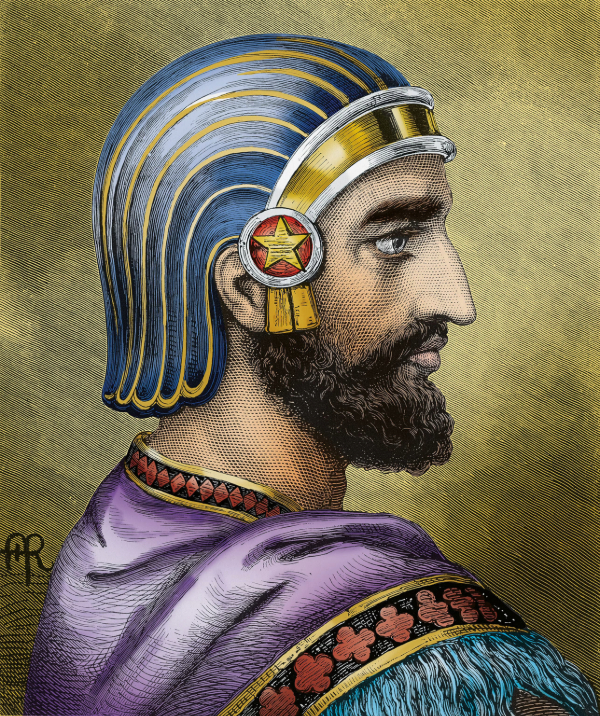
Cyrus the Great

c. 600-530 BCE

Founder of the Achaemenid Empire, allowed exiled Jews to return and rebuild their temple. Produced the Cyrus Cylinder which acknowledges religious coexistence.
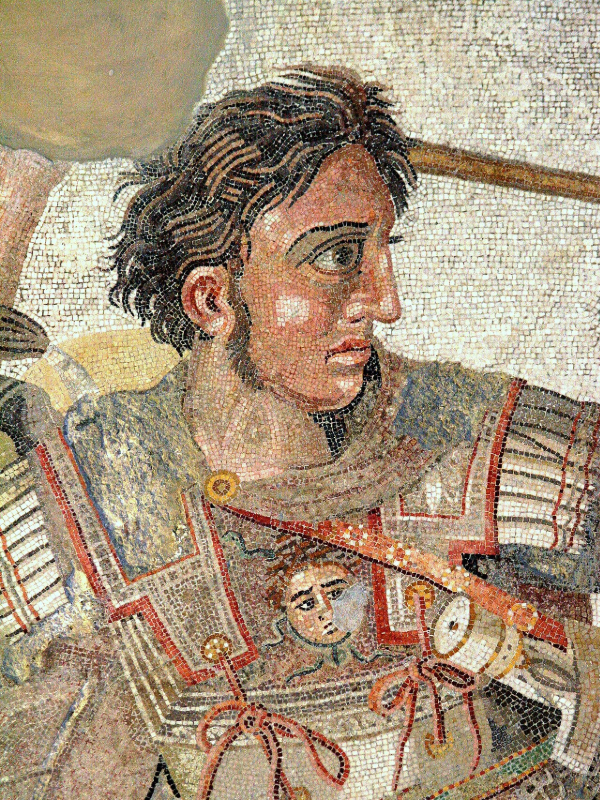
Alexander III of Macedon

356-323 BCE

Macedonian conqueror who deified himself, used oracles (fortune tellers) for his campaigns, and killed his close friend Cleitus the Black out of drunken beligerence during an argument.

The Evidence

Archaeological, textual, and chronological proof

01

Religious and Prophetic Context

Cyrus, a Zoroastrian monotheistic king, is the only person outside the Israelite tradition referred to as "messiah" (anointed one) in the Hebrew Bible (Isaiah 45:1), acknowledged by Jewish, Christian, and Islamic traditions. Biblical scholars note his unique status as God's chosen instrument for liberating the Jews. This is particularly compelling: the God of Israel honoring a righteous king from a completely different monotheistic faith tradition (Zoroastrianism), demonstrating divine recognition transcends religious boundaries when true monotheism and justice prevail. His role in fulfilling biblical prophecy aligns perfectly with the righteous character of Dhul-Qarnayn. Alexander, a polytheistic Hellenist who died young from illness or poisoning, left no comparable religious legacy. The Cyrus Cylinder's connection to Biblical accounts further confirms his prophetic significance.
02

Character and Governance

Cyrus exemplified the righteous and just ruler described in Surah Al-Kahf. He freed enslaved peoples, including the Jews from Babylonian captivity, and respected local customs and religions. His Cyrus Cylinder inscription demonstrates unprecedented religious tolerance and has been called an early declaration of human rights. In contrast, Alexander's reign was marked by military brutality, mass executions (Tyre, Gaza, Thebes), and the imposition of Hellenistic culture. These characteristics are incompatible with the Quranic portrayal of Dhul-Qarnayn.
03

The "Two-Horned" Title

"Dhul-Qarnayn" means "possessor of two horns" or "lord of two ages/eras." Cyrus was known as the ruler of two great civilizations (Media and Persia) united under his crown. Persian royal iconography sometimes depicted rulers with horned crowns symbolizing divine authority. The Book of Daniel (8:20) describes a vision of a ram with two horns representing "the kings of Media and Persia," directly connecting this imagery to Cyrus's dual kingship. While Alexander adopted similar imagery, he did so by appropriating Persian royal symbolism after conquering the Achaemenid Empire, not as an original attribute.
04

Quranic Geographic Accuracy

Surah Al-Kahf describes Dhul-Qarnayn traveling to where the sun sets in a "muddy spring" and where it rises on a people with no shelter. These descriptions align with Cyrus's western campaigns to the Mediterranean (muddy coastal regions) and eastern expansions into the steppes of Central Asia (treeless plains inhabited by nomadic peoples). The Quranic account (18:94-98) of building a barrier against Gog and Magog between two mountains matches the Caucasus geography perfectly. Alexander never reached the geographical extremes of Cyrus's empire nor established the prophetic barrier described in revelation.
05

Reached Lands With No Shelter From The Sun

Surah Al-Kahf (18:90) describes Dhul-Qarnayn reaching "a people who had no shelter from it [the sun]." This perfectly describes the Caucasus mountain region where Cyrus built his fortifications. The mountains near Mount Shahdagh and the surrounding highlands are characterized by treeless, rocky terrain offering no natural cover from the sun. Unlike forested mountain ranges, these barren peaks provided no shade for the indigenous peoples living there. Historical accounts confirm Cyrus built fortifications in the Caucasus region against northern tribes, precisely in this treeless mountainous terrain. The Quranic description matches the geographic reality: mountains themselves do not provide shelter from the sun when they lack forest cover. This was the exact location where Cyrus encountered the Caucasian Albanian peoples and established his defensive barrier.
06

Communicated With People He Could Not Understand

Surah Al-Kahf (18:93) describes Dhul-Qarnayn reaching a people "who could scarcely understand speech." The ancestors of the Lezgin people were incorporated into the Achaemenid Empire under Cyrus's rule in the 6th century BCE, becoming part of the satrapy of Media. These Caucasian Albanian tribes spoke Northeast Caucasian languages (Lezgic branch), completely distinct from Iranian languages. Albanian contingents fought for the Achaemenid Empire at the Battle of Gaugamela against Alexander, demonstrating their integration into Cyrus's imperial system. The Lezgin language is now deemed vulnerable by UNESCO, its ancient distinctiveness preserved through millennia.
07

Fought Barbaric Northern Tribes

The Massagetae and Cimmerians were Scythian nomadic tribes notorious for barbaric practices. Herodotus documented their ritual cannibalism: elderly men were sacrificed, cooked, and eaten by their families. The Massagetae practiced open promiscuity, with men hanging their quivers outside women's tents to signal sexual intentions, and wives being held in common despite nominal monogamy. These tribes represented the archetypal "forces of chaos" that Cyrus fought to contain. The Massagetae had expelled the Scythians from Central Asia, who in turn displaced the Cimmerians into the Caucasus region. While Cyrus's intact tomb at Pasargadae contradicts Herodotus's dramatic account of his death at the hands of Queen Tomyris, the existence of these northern threats and Cyrus's campaigns against them remain historically verified. His defensive framework protected civilization from these barbaric invasions for centuries.
08

The Caucasian Defensive System

The Gilgilchay Wall near Mount Shahdagh in Azerbaijan was built in preparation for the Gog and Magog threat. The wall's strategic placement at the base of a mountain, rather than at the more practical coastal location for trade and travel, reveals its true purpose: defending against forces emerging from the mountain passages. While built and reinforced by the Sasanian Persians in the 5th-6th centuries CE, these fortifications followed defensive strategies established during the Achaemenid period under Cyrus. The actual barrier described in Surah Al-Kahf (18:83-98) (the iron and copper wall built "between two mountains") remains in an unknown location in this region. The Gilgilchay fortifications serve as archaeological evidence that this area was recognized as the strategic frontier against northern tribes (Gog and Magog) that Cyrus first contained, with later Persian dynasties maintaining defensive readiness against the eschatological threat.
09

The Village of Kurush

Near Mount Shahdagh lies the ancient village of Kurush, one of the highest human settlements in the Caucasus. The name "Kurush" is the Old Persian form of "Cyrus" (کُورُش), linking this geographic location directly to the Persian king. Prehistoric cave dwellings discovered at the base of Mount Shahdagh indicate habitation for over 9,000 years, with continuous settlement tracing back thousands of years to the Bronze Age. This toponymic evidence (an ancient village bearing Cyrus's name at the exact location of the barrier described in the Quran) provides compelling geographic testimony that Cyrus, not Alexander, is the true Dhul-Qarnayn.
10

Timeline Analysis

Cyrus ruled 559-530 BCE, establishing the largest empire the ancient world had seen, with time to build extensive fortifications and implement defensive strategies against northern threats. Alexander's campaigns (334-323 BCE) were characterized by rapid conquest, not infrastructure development. Alexander spent minimal time in the Caucasus region and never established the administrative apparatus necessary for such monumental construction projects. The archaeological evidence from Pasargadae and other Achaemenid sites demonstrates Cyrus's capacity for large-scale construction.
11

Persian vs. Greek Sources

Persian historical records, including the Cyrus Cylinder, Behistun Inscription, and accounts preserved in Xenophon's Cyropaedia, provide contemporary evidence of Cyrus's achievements. Greek accounts of Alexander, written centuries after his death by authors with political agendas, lack the archaeological corroboration found for Cyrus's reign. The reliability gap between contemporary Persian sources and later Greek legends is substantial and well-documented by modern scholars.
12

Greek Historiographic Bias

Greek historians like Herodotus, Arrian, and Plutarch systematically reframed Persian achievements as Greek accomplishments. The Alexander Romance literature attributed Cyrus's wall-building and eastern campaigns to Alexander, despite clear archaeological evidence to the contrary. This pattern of legacy appropriation served to elevate Greek civilization at the expense of Persian historical reality. The conflation of Alexander with Dhul-Qarnayn emerged from these Hellenistic legends, obscuring Cyrus's true role.
13

Alexander Destroyed Persian Records

In 330 BCE, Alexander burned Persepolis, the ceremonial capital and archive center of the Achaemenid Empire. This act of destruction obliterated centuries of Persian historical records, royal inscriptions, and administrative documents that detailed Cyrus's achievements. Ancient sources confirm Persepolis housed the empire's most important archives. The systematic destruction of Persian records allowed Greek historians to rewrite history without contradicting documentary evidence, attributing Cyrus's monumental achievements to Alexander. Archaeological excavations reveal the extensive fire damage to Persepolis's administrative quarters. This wasn't merely conquest; it was deliberate erasure of Persian historical memory, enabling the false narrative that Alexander, not Cyrus, was Dhul-Qarnayn.
14

Empire Longevity

The Achaemenid Empire founded by Cyrus lasted over 220 years (550-330 BCE), becoming the longest-lasting and most stable empire of the ancient world. It survived through multiple generations, maintaining sophisticated administrative systems and infrastructure. In stark contrast, Alexander's empire collapsed immediately upon his death in 323 BCE, fragmenting into warring successor kingdoms (the Diadochi). An empire that cannot outlast its founder reveals the shallow foundations of Alexander's conquests. He destroyed far more than he built. The Persian administrative genius established by Cyrus created a model that influenced governance for millennia.

The Contrast

Righteous builder vs. legacy thief

Cyrus the Great

Cyrus the Great

Reign Duration
30 years (559-530 BCE) with stable governance and infrastructure development
Empire Longevity
220+ years of Achaemenid continuity, surviving multiple generations
Character
Merciful liberator, religiously tolerant, builder of civilization
Wall Construction
Built extensive Caucasian fortifications during Achaemenid period
Geographic Reach
From Mediterranean to Central Asian steppes—true "east and west"
Legacy
Respected by all conquered peoples, freed slaves, established human rights
Historical Sources
Contemporary Persian records, Cyrus Cylinder, archaeological evidence
Alexander of Macedon

Alexander of Macedon

Reign Duration
13 years (336-323 BCE) of constant warfare, no time for major construction
Empire Longevity
Collapsed immediately upon death, fragmenting into warring kingdoms
Character
Brutal conqueror, mass executioner, destroyer of cities
Wall Construction
No archaeological evidence of Caucasian wall construction
Geographic Reach
Never reached Cyrus's full territorial extent, particularly in the east
Legacy
Imposed Hellenistic culture by force, destroyed Persian heritage
Historical Sources
Greek legends written centuries later by biased authors

Research Foundations

Sources and references supporting this thesis

Primary Sources
The Cyrus Cylinder
Ancient Persian inscription (539 BCE) documenting Cyrus's conquest of Babylon and policy of religious tolerance
Quranic Text
Surah Al-Kahf (18:83-98)
Quranic narrative describing Dhul-Qarnayn's travels to the setting and rising of the sun, and construction of a barrier against Gog and Magog
Biblical Reference
Isaiah 45:1
Hebrew Bible passage referring to Cyrus as God's "anointed one" (messiah), the only non-Israelite given this title
Comparative Analysis
Alexander Romance Literature
Medieval legendary accounts falsely attributing Cyrus's achievements to Alexander, including wall construction against Gog and Magog
Archaeological Evidence
Gilgilchay Wall System
Caucasian fortifications near Mount Shahdagh, Azerbaijan, with Sasanian structures (5th-6th century CE) built on Achaemenid defensive strategies
Classical History
Xenophon's Cyropaedia
Ancient Greek biographical account of Cyrus the Great's life and governance
Greek Historiography
Herodotus's Histories
5th century BCE Greek account documenting Persian Empire and Cyrus's reign
Archaeological Sites
Achaemenid-Sasanian Fortifications
Multiple defensive structures throughout Caucasus region, with Sasanian walls following Achaemenid defensive lines from the 6th century BCE
Modern Scholarship
Achaemenid Rule in Caucasus
Contemporary research on Achaemenid presence and defensive infrastructure in the Caucasus region under Cyrus and Darius
Eschatological Context
Gog and Magog Traditions
Biblical, Quranic, and historical accounts of northern tribes contained by Dhul-Qarnayn's barrier
Geographic Studies
Mount Shahdagh Region
Analysis of Caucasus mountain geography matching Quranic description of barrier "between two mountains"
Historical Context
Persian Royal Iconography
Study of horned crown symbolism in Achaemenid art representing divine authority and dual kingship (Media and Persia)

The evidence overwhelmingly points to Cyrus the Great as the authentic Dhul-Qarnayn: a righteous ruler whose achievements were systematically appropriated by Greek historiography and falsely attributed to Alexander. The archaeological record, timeline analysis, and character assessment all confirm what the Quran described. A just king who built barriers to protect civilization, traveled to the ends of the known world, and governed with divine wisdom.

It is time to reclaim the historical truth and acknowledge Cyrus's legacy free from the distortions of Hellenistic propaganda.

A Note on Sources

The Quran confirms what came before it from divine revelation—namely, the Torah (Tawrat), the Zabur (Psalms of David), and the Gospel (Injeel) in their original, uncorrupted forms. This research draws upon the Hebrew Bible (Tanakh), particularly Isaiah's prophecy about Cyrus and the Psalms of David, which represent preserved divine revelation recognized by Islamic tradition.

It is important to note that none of this thesis relies on the New Testament or the Talmud, which are manmade texts not recognized as divine revelation in Islamic scholarship. The New Testament postdates the life of Prophet Isa (Jesus, peace be upon him) by decades and reflects theological innovations rather than preserved revelation. The Talmud represents rabbinical commentary and interpretation, not the original Torah.

Our evidence draws from: the Quran (divine revelation), the Hebrew Bible's Torah, Zabur, and Prophets (preserved portions of divine revelation), archaeological findings, contemporary Persian inscriptions, and historical records. This approach maintains theological consistency while establishing historical truth through multiple independent lines of evidence.

Contact

Questions, feedback, or further research inquiries?

We welcome scholarly discussion, constructive critique, and collaboration on this historical thesis. Whether you're a researcher, historian, theologian, or simply curious about the evidence, feel free to reach out.

Send Email

[email protected]